How is Nandigaura Special?
VISION OF NANDIGAURA
Nandigaura is envisioned as a sacred space that preserves and promotes India’s rich cultural and traditional values through every aspect of its Gaushala. It aims to develop into a destination for farm and spiritual tourism, offering visitors a peaceful rural experience rooted in devotion, learning, and sustainable living.
The initiative includes workshops on indigenous cow breeds, cow protection, Panchagavya practices, and eco-conscious lifestyles, along with in-house production of natural cattle feed and organic Panchagavya-based products.
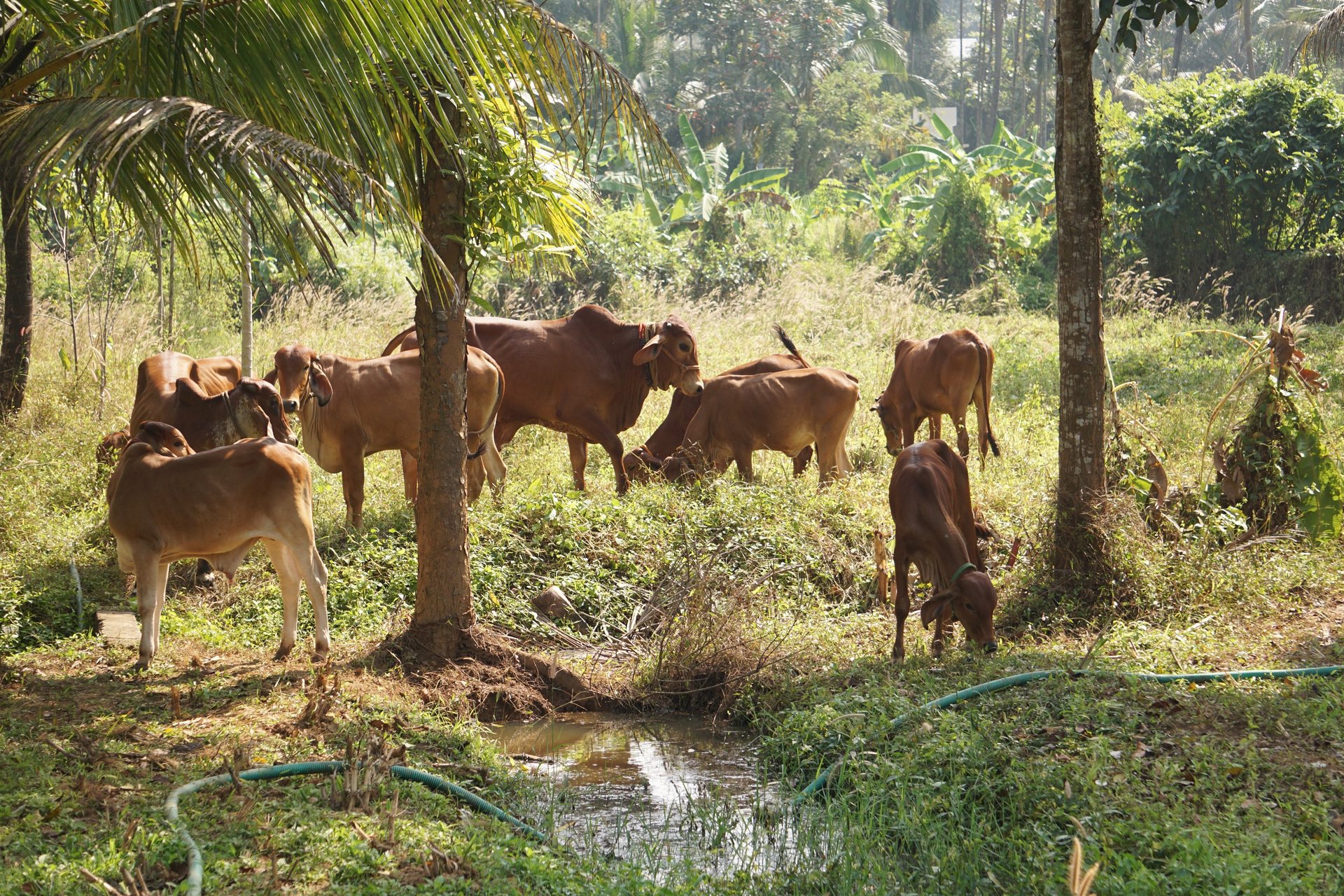
The mission is centered on the lifelong protection of indigenous Nandis and Gaumathas, ensuring free grazing with no nose ropes, natural living, and traditional Vedic feeding practices. Through regular Gau and Nandi Pujas, holistic healthcare, and the establishment of sacred spaces such as the Nandibhairava Temple and Saptha Gaumatha Temple, Nandigaura seeks to honor their spiritual significance while fostering harmony between nature, culture, and sustainable living.
WHY ONLY INDIGENOUS COWS?
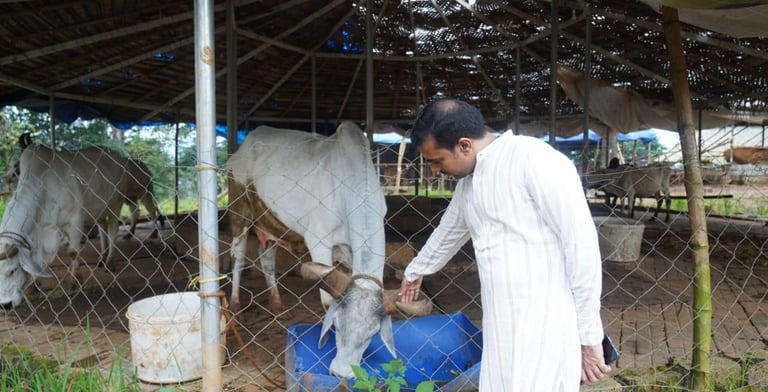
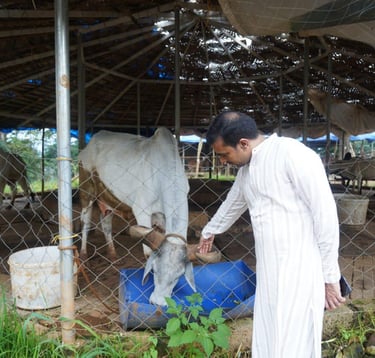
The dedication to Indian indigenous cows began with spiritual guidance, as Kalyani Menon, a teacher with The Art of Living, was inspired by her Guru to care for native breeds. What started as seva soon deepened through personal healing experiences and continued learning in Panchagavya and traditional sciences.
Scientifically, indigenous cows produce A2 milk, known to be easier to digest and beneficial for overall health. Their dung and urine contain rich microbial properties that support organic farming, soil fertility, and natural immunity. These breeds are naturally disease-resistant and climate-resilient, making their preservation vital for biodiversity and sustainable agriculture.In Hindu tradition, the cow is revered as Gaumatha, symbolizing nourishment and sacred life. Protecting indigenous cows therefore unites science, sustainability, and spiritual heritage.
FEEDS IN OUR GAUSHALA..
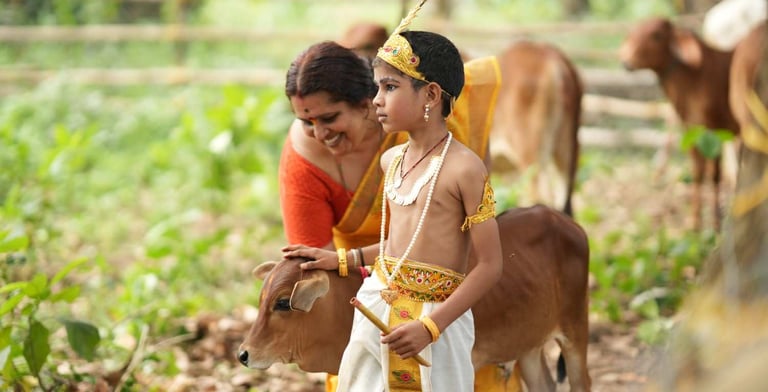
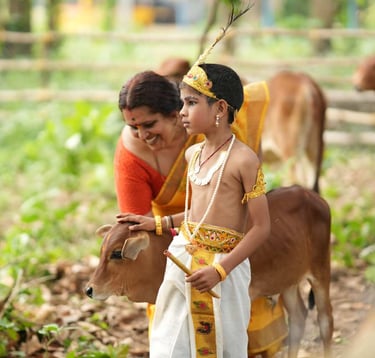
The dedication to Indian indigenous cows began with spiritual guidance, as Kalyani Menon, a teacher with The Art of Living, was inspired by her Guru to care for native breeds. What started as seva soon deepened through personal healing experiences and continued learning in Panchagavya and traditional sciences.
Scientifically, indigenous cows produce A2 milk, known to be easier to digest and beneficial for overall health. Their dung and urine contain rich microbial properties that support organic farming, soil fertility, and natural immunity. These breeds are naturally disease-resistant and climate-resilient, making their preservation vital for biodiversity and sustainable agriculture.In Hindu tradition, the cow is revered as Gaumatha, symbolizing nourishment and sacred life. Protecting indigenous cows therefore unites science, sustainability, and spiritual heritage.
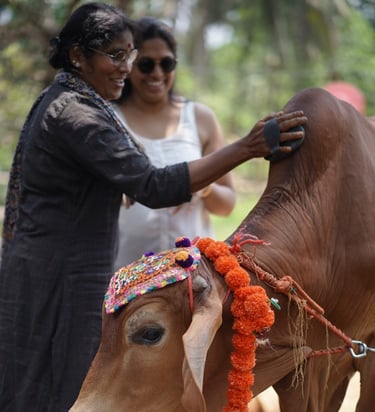
What do we do with Bulls and Old Cows?
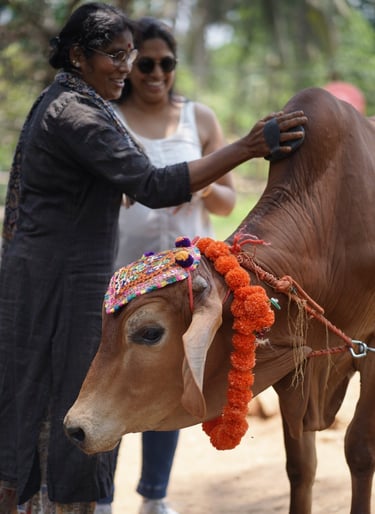
At Nandigaura, old cows and bulls are honored, not abandoned. They are cared for with the utmost love and dignity, never given away, sold, or separated, and allowed to live out their natural lives in peace. They are nourished with traditional, natural feeds and cared for through gentle, holistic practices that respect their age and sacredness.
From an income perspective, the Gaushala does not depend on milk or conventional dairy activities. Instead, it embraces a sustainable and ethical path by focusing on the immense potential of Panchagavya-based products, where cow dung and cow urine—often overlooked—become powerful resources. These elements form the foundation for organic farming inputs, natural healing applications, and eco-friendly products, aligning livelihood with values, sustainability with reverence, and service with self-reliance.
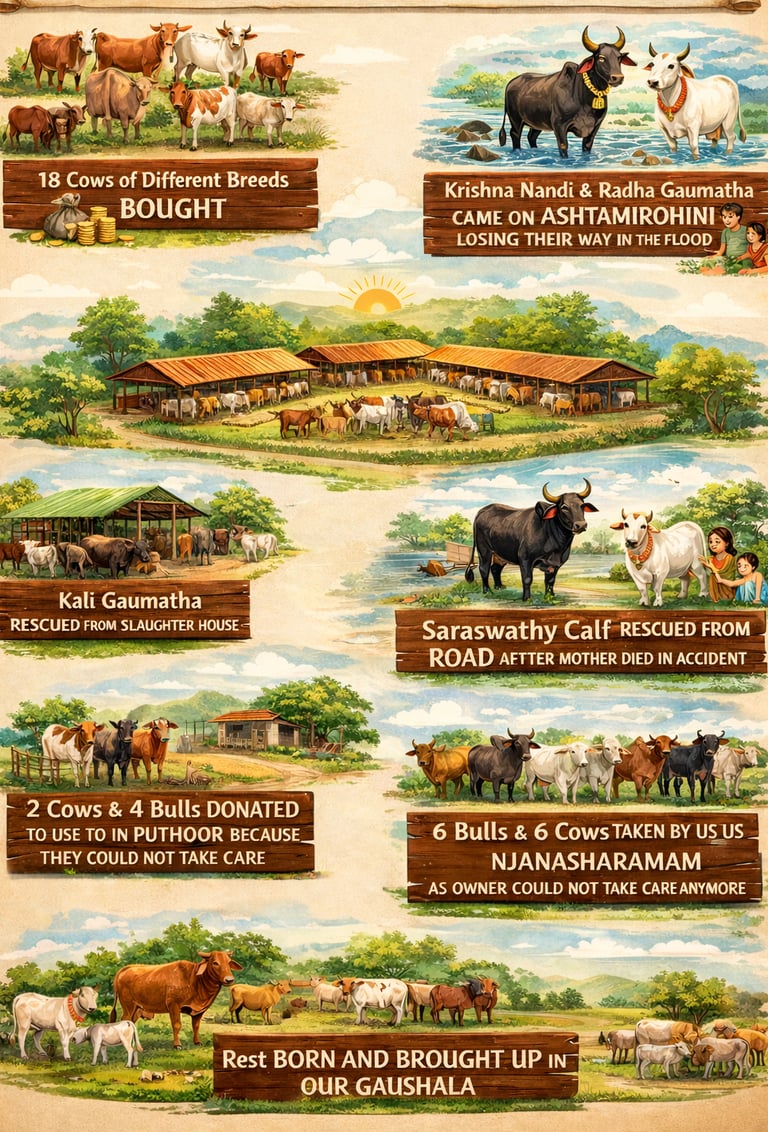
How Love, Rescue, and Birth Built Our Gaushala
At Nandigaura, old cows and bulls are honored, not abandoned. They are cared for with the utmost love and dignity, never given away, sold, or separated, and allowed to live out their natural lives in peace. They are nourished with traditional, natural feeds and cared for through gentle, holistic practices that respect their age and sacredness.
From an income perspective, the Gaushala does not depend on milk or conventional dairy activities. Instead, it embraces a sustainable and ethical path by focusing on the immense potential of Panchagavya-based products, where cow dung and cow urine—often overlooked—become powerful resources. These elements form the foundation for organic farming inputs, natural healing applications, and eco-friendly products, aligning livelihood with values, sustainability with reverence, and service with self-reliance.
Gaushala Location:
NINNUKUZHI,KATTILAPOOVAM P O.,PANDIPARAMBU,CHIRAKKEKODE
THRISSUR - 680028